

Jim and Martine drove 7,610 kilometres in August and September for €94. At the pump it would have been €1,269.
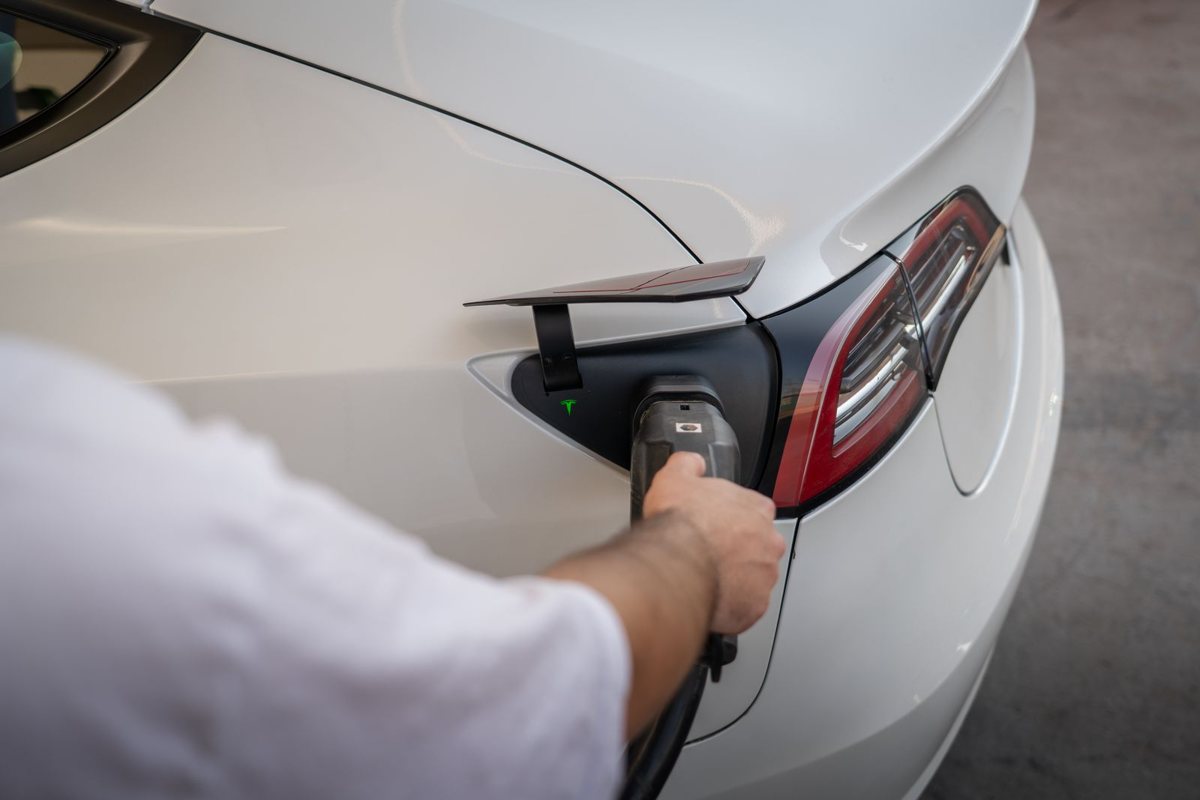
Meet Jim and Martine. They both drive electric: Jim a Tesla Model X, Martine an Audi A6 e-tron. There are solar panels on the roof, a home battery in the cellar and a smart-controlled EV charger on the driveway. Together they form one power plant, perfectly sized for their household consumption and for charging two cars. Smart-E-Grid controls that entire power plant and decides at every moment where the electricity earns the most: in the house, in the battery, in the cars or on the grid. In August and September they charged 1,712 kilowatt hours between them, good for around 7,610 kilometres. We put their two energy bills next to what those same kilometres would cost at the pump.
Two households, the same kilometres
Picture the same household, but with fuel-powered cars: for Jim a diesel BMW X5, an SUV of the same size as the Model X, and for Martine the same Audi A6, but the 45 TFSI petrol. They drive the same distance, 3,805 kilometres per car over two months, and fill up at the official pump price of those months.
Based on actual bills from Jim and Martine, August and September 2026. Kilometres derived from the kilowatt hours charged, at 25 kWh per 100 km for the Model X and 20 kWh for the A6 e-tron, with the same kilometres per car. Fuel prices: average official rate in August and September 2026 (Statbel), diesel €2.258 and €2.418, petrol €1.925 and €2.057 per litre.
What 100 kilometres costs
The consumption rate on a Smart-E-Grid bill is a single amount for everything you used that month, home charging included: the bill total without the fixed fee and the capacity tariff, divided by the number of kilowatt hours. For Jim and Martine that was 3.91 cents in August and 7.44 cents in September. September is higher because of less sun and higher market prices.
Even in September, the more expensive of the two months, Jim and Martine drive well over 90 per cent cheaper than with the diesel SUV. In August that rises to 95 per cent.
The household benefits too
The cars are not the only thing that benefits from that rate. In those two months the household of Jim and Martine used 1,248 kilowatt hours. A household without solar panels and without a battery would pay an average of 37.35 and 38.10 cents per kilowatt hour for that on the market. Jim and Martine paid 3.91 and 7.44 cents per kilowatt hour.
All in all, two cars and the house, Jim and Martine paid €164 for energy in August and September. With two fuel cars and a standard contract that would have been €1,739.
How do Jim and Martine do it?
It starts with an installation that fits. The power plant of Jim and Martine covers a complete ecosystem:
The control system looks at the sun, the market prices and what the household needs, and decides at every moment where the electricity goes: the house, the battery or the cars. It automatically adapts to their consumption and to the times at which they consume.
The cars and the battery charge on their own sun. Almost everything the panels generate stays in the house.
What is still needed, the control system buys in the cheapest hours of the dynamic contract. The battery covers the house at those same moments.
How to read these figures
This is the result of one household in August and September. August was a real summer month, September was not. In terms of sunshine hours, September in Belgium is an average month, neither better nor worse than the annual average. Even then, Jim and Martine still drove for €1.67 per 100 kilometres, well over 90 per cent less than the diesel SUV. In winter the sun delivers less and prices are higher, so the difference gets smaller, but it remains a difference of a different order than at the pump. Your figure depends on your installation, your consumption and how much you drive. Past results offer no guarantee of future performance.
One more nuance. The electricity price also moves with fossil fuels, because gas plants often set the price on the wholesale market. An electric car does not entirely escape that. The difference lies in what you can do about it yourself: generate, store and shift to the cheapest moment. At the pump you simply buy at the price of the day.
Want to know what this gives you?
No solar panels or battery yet? Calculate what you can save, tailored to your situation.
Already have an installation? Ask your adviser to check whether your inverter is controllable, whether your battery is sized correctly and whether your EV charger can charge smartly. Have your installation checked.
Related articles

Rik uses more than twice as much electricity as an average household. His annual bill: €585.
Whoever uses a lot should have the highest bill on the street. Rik uses almost 10,000 kWh a year and paid €585 for twelve months, everything included. For seven months he got money back.

Two solar installations in Leuven make public infrastructure ready for the future
For a university in Leuven, Opteco built two solar installations (on the central warehouse and across the administrative complex) with a combined capacity of more than 574 kWp. A concrete example of how public infrastructure is evolving step by step towards an energy-neutral future.

Where history and solar energy meet: working on the Felix Pakhuis
On the roof of the Felix Pakhuis in the heart of Antwerp we installed solar panels on a heritage building, with extra equipment and a crane to get all the panels up to the roof. The result: a historic building that is fully part of the energy transition.